JUMIA collaborates with BILITI Electric to introduce E-Vans into its delivery fleet.
 Add CMV360 on Google
The Taskman variant is designed for business last-mile deliveries, with a range of 100 km per cost, a payload of 500 kg, and a speed of 50 kilometres per hour.

By Priya Singh
The Taskman variant is designed for last-mile deliveries, with a range of 100 km per cost, a payload of 500 kg, and a speed of 50 kilometres per hour.
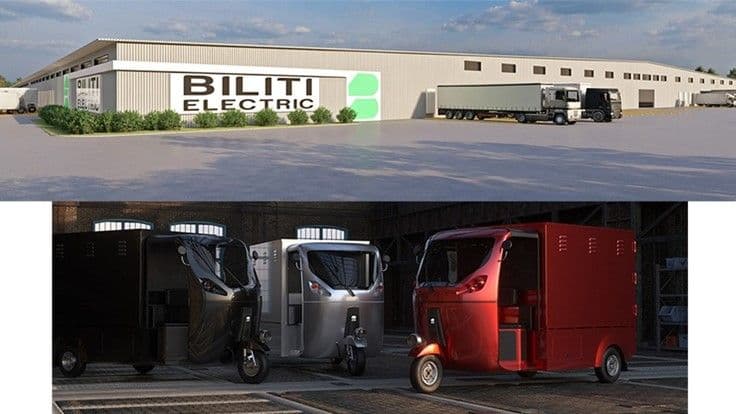
JUMIA, the leading pan-African e-commerce company, has announced a partnership with California-based EV options supplier BILITI Electric to add electric three-wheelers to its supply fleet in Kenya. The two companies have completed the pilot project and plan to expand the fleet within Kenya in the first section, and then throughout Africa. This collaboration is a critical step toward Africa's progress in the e-mobility industry to achieve its environmental sustainability goals, according to a press release from BILITI Electric.
The primary pillar of JUMIA's sustainability strategy is "leveraging technology to improve everyday lives in Africa." "We are committed to developing a supply chain that will reduce our operations' environmental impact. The addition of these EVs to our 3000+ van last-mile delivery fleet is a critical step in our journey toward achieving our ESG goals," says Juan Seco, CEO of JUMIA Kenya.
"We are excited about this collaboration because JUMIA is a growing company on its way to profitability. Last-mile delivery costs account for 53% of total shipping costs. When compared to any internal combustion engine vehicle, EVs help save significant money. We are confident that we will be able to provide JUMIA with much faster, cheaper, and more convenient last-mile deliveries," said Rahul Gayam, Co-Founder and Co-CEO of BILITI Electric.
The Taskman variant is designed for business last-mile deliveries, with a range of 100 km per cost, a payload of 500 kg, and a speed of 50 kilometres per hour. With BILITI's SmartSwapp expertise, the rider can quickly swap the automobile battery and can be recharged in a minute. The vehicle has accumulated a total mileage of 22 million miles and has delivered 24 million shipments worldwide. Taskman is currently used by Amazon, IKEA, Flipkart (Walmart), Wasoko (Sokowatch), BigBasket (Tata), Zomato, JioMart (Reliance), and others, and has a presence in 15+ countries including Japan, the United States, the United Kingdom, France, Portugal, Germany, Uganda, Kenya, Dubai, and India.
In 2019, Kenya reduced import duties on fully electric vehicles. The following year, it launched a comprehensive strategy to increase EV adoption. Nairobi, home to 4.3 million people and ranked the world's second worst city for traffic congestion, has PM2.5 levels that are five times higher than WHO recommendations for 2021.
By switching from fossil-fuel bikes to those e-vans, delivery agents can earn more money by delivering more orders with less difficulty.
Kenya is perfectly positioned to launch such an initiative. In 2020, renewables generated approximately 92% of the electrical energy used in the country, including hydropower, geothermal, photovoltaic PV, and wind. Kenya's goal is to achieve 100% clean energy use by 2030.

Hi there! I'm Priya. From trucks to vans and everything in between, I'm here to provide you with up-to-date in .....