Scientists Issue a Temperature Advisory to Farmers to protect the wheat crops from yellow rust disease.
 Add CMV360 on Google
Wheat is mostly produced in Uttar Pradesh, Haryana, Punjab, Maharashtra, Bihar, MP, and Chhattisgarh. The crop is harvested in April.

By Priya Singh
Wheat is mostly produced in Uttar Pradesh, Haryana, Punjab, Maharashtra, Bihar, MP, and Chhattisgarh. The crop is harvested in April.
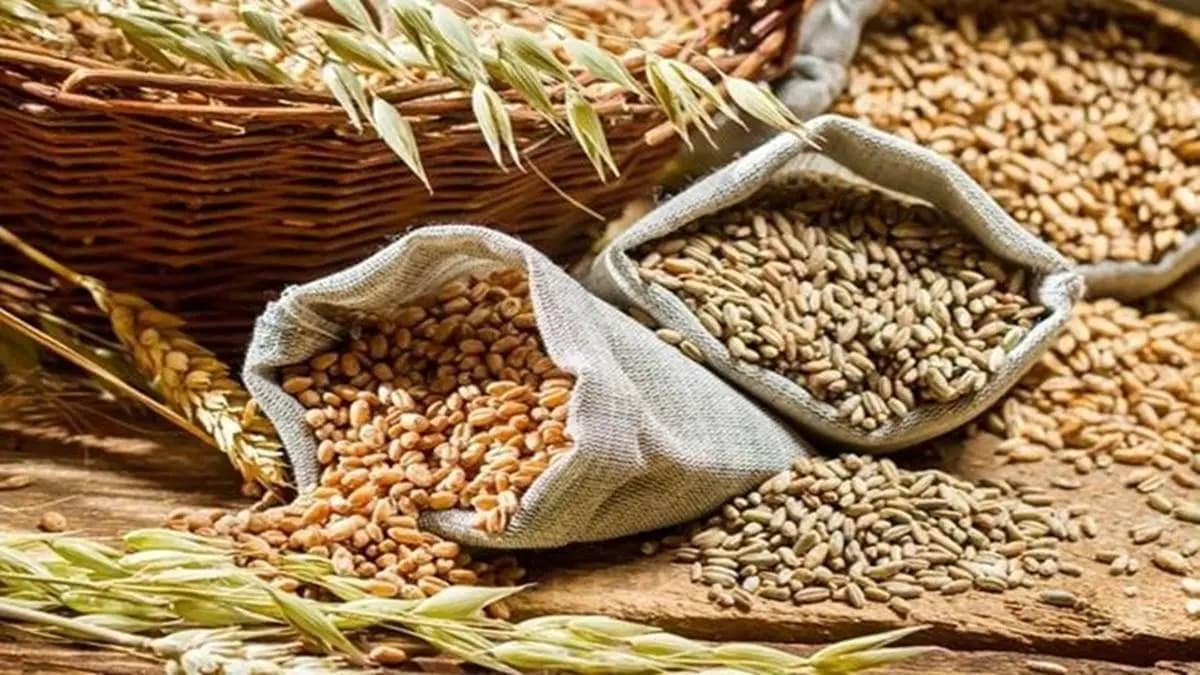
The current climatic circumstances are favourable for the growth of yellow rust disease, farmers are recommended to continue examining wheat crops for the disease on a frequent basis. The Indian Institute of Wheat and Barley Research (IIWBR), Karnal, has published a few steps to mitigate the impact of rising mercury on crops if temperatures exceed certain thresholds.
Scientists at the ICAR-Indian Institute of Wheat and Barley Research (IIWBR), Karnal, urged wheat growers to water their crops lightly as needed. The warning comes as a result of temperature variations in the area.
Wheat production will break Records
In the 2022-23 crop year, wheat production is predicted to reach a record milestone of 112.18 million tonnes (July-June). Wheat production declined marginally from the previous year to 107.74 million tonnes due to heat waves in various places. Wheat is a major rabi crop.
Wheat is mostly produced in Uttar Pradesh, Haryana, Punjab, Maharashtra, Bihar, MP, and Chhattisgarh. The crop is harvested in April.
Irrigation should be stopped if a strong windy weather pattern is observed, according to Dr Gyanendra Singh, Director of the ICAR-IIWBR, to prevent lodging, which could lead to yield loss.
The experts also advised keeping an eye out for the randomly appearing leaf aphid (chepa) in wheat. Farmers are anxious since the weather has been changing over the last few days. According to the director, we have issued an advisory for the second week of February owing to temperature changes. If the temperature rises, farmers having access to spray irrigation can water their fields for 30 minutes in the afternoon using a sprinkler.
He also added that farmers who utilize drip irrigation must ensure that the crop receives the proper amount of moisture to avoid stress. Two sprays of 0.2 per cent potassium chloride throughout the jointing and heading stages may reduce losses and prevent terminal heat damage in the event of a sudden temperature increase.
Farmers were told to keep a cautious eye out for yellow rust disease in their wheat crop. If the yellow rust disease appears, the Director suggested contacting the state agriculture department, the research institute, or the local Krishi Vigyan Kendra.
Precautions for Yellow Rust Disease
The majority of Haryana's crop is in the blooming and tillering stages. The temperature has begun to rise as most sections of the state had significantly hotter days, with maximum temperatures reaching beyond 27°C, which is 4°C higher than the normal February temperature.
The Chandigarh meteorological service has projected a 2-3 °C rise in low temperatures over the next four days, with no rain predicted in the next few days.
In the event that rain is expected, it is recommended to monitor soil moisture before and after spraying. If yellow rust is found, spray one acre with 200 cc of propiconazole 25 EC diluted in 200 litres of water.
In addition, farmers with sprinkler irrigation can irrigate their fields for 30 minutes in the afternoon if the temperature rises, and they are advised to apply light irrigation to the crop. If there is a high wind, irrigation should be halted; otherwise, the crop may fall, causing additional harm, according to the alert.

Hi there! I'm Priya. From trucks to vans and everything in between, I'm here to provide you with up-to-date in .....